
Good to Know Technique
Post-harvest fertilization: a nutritional strategy for orchards and vineyards
Autumn fertilization to replenish reserves and prepare for a more uniform vegetative restart.
20/07/2026
Summary:
The post-harvest phase represents a key moment to restore the plant’s nutritional balance. Targeted intervention supports the accumulation of reserves and a more regular vegetative start in the following season. This in-depth article analyzes the physiological basis and technical solutions for an effective strategy in orchards and vineyards.
The agronomic role of post-harvest fertilization
After harvest and vintage, the plant enters a delicate physiological phase: it has consumed significant resources to sustain fruit production and ripening. In this context, the leaf apparatus—while still active—continues photosynthesis and contributes to rebuilding reserves.
A lack of adequate nutritional interventions can result in:
- reduced carbohydrate and nitrogen reserves in storage organs
- less efficient flower bud differentiation
- uneven bud break in the following season
Autumn fertilization therefore becomes a technical lever to guide the plant toward dormancy under balanced conditions. In particular, in seasons characterized by high yield load or summer water stress, the plant’s ability to restore reserves autonomously may be limited, making nutritional intervention even more strategic.
Plant physiology and reserve accumulation
During the post-harvest period, fruit crops and vines begin translocating nutrients and organic compounds toward roots, trunk, and buds. This process mainly involves:
- organic nitrogen, essential for protein synthesis and vegetative restart
- reserve carbohydrates, stored as starch
- micronutrients such as boron, involved in bud fertility
Targeted nutrition supports these physiological processes, especially under stress conditions or in low-fertility soils.
Accumulation efficiency is closely linked to thermal and water conditions and to the persistence of leaf and root activity. The root system retains good absorption capacity as long as soil temperature remains approximately above 10–12°C, making post-harvest nutrient supply effective.
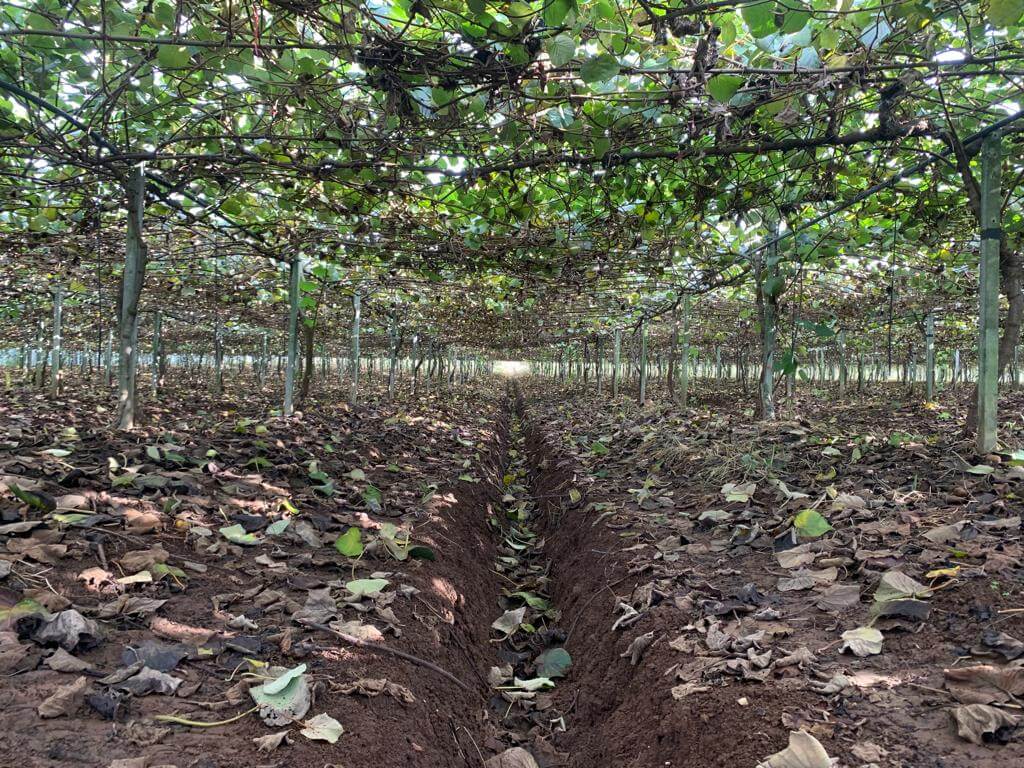 Post-harvest management of kiwi plants: as long as the foliage remains active, the plant continues to photosynthesise and build up reserves.
ILSA nutritional strategy: soil + foliar integration
Soil fertilization: building reserves
Soil application is the foundation of post-harvest fertilization strategy. The objective is to promote reserve accumulation through an organic nitrogen supply aligned with the plant’s physiological timing and the soil–crop system conditions. ILSA solutions allow modulation of the intervention according to crop depletion and soil fertility, acting on the balance between nitrogen availability and organic matter management.
FERTIL™ 12.5, a high-concentration organic nitrogen fertilizer, is suitable when the production season has led to significant resource depletion. Its high organic nitrogen content favors faster mineralization, supporting reserve replenishment and ongoing metabolic processes in the post-harvest phase.
FERTIL™ 10, a gradual-release organic nitrogen fertilizer, fits a more balanced approach, suitable for systems with stable vegetative-productive conditions. The nutrient supply is more progressive, accompanying the plant into dormancy without excesses while maintaining a good balance between nutrition and soil management.
At this stage, product choice depends not only on nutrient quantity but on the ability to synchronize nitrogen release, reserve accumulation, and soil conditions—key factors for proper dormancy and vegetative restart.
Foliar fertilization: rapid and targeted support
In the post-harvest phase, foliar nutrition complements soil application by acting directly on the photosynthetic apparatus while it is still active. During this period, the plant is engaged in nutrient translocation and reserve accumulation: targeted foliar supply supports metabolism quickly, integrating key elements involved in bud differentiation and reserve synthesis.
ILSAMIN® N90, a foliar biostimulant with high content of left-handed amino acids, provides rapidly assimilable nitrogen, supporting enzymatic activity and metabolic processes governing nitrogen compound accumulation in storage organs. The action of amino acids obtained through an enzymatic hydrolysis process is particularly effective during the final stage of photosynthetic activity and in optimizing nutrient use efficiency before leaf fall.
ILSAMIN® BORO, a foliar fertilizer with boron complexed with amino-acids, supplies a key micronutrient in physiological processes linked to bud fertility. Boron is involved in flower differentiation and sugar mobility and can contribute to improving fruit set potential in the following season.
The combination of these two products enables complementary action on nitrogen metabolism and bud functionality, strengthening accumulation processes at a stage where the plant’s capacity to store reserves is a key factor for production stability.
The effectiveness of foliar intervention is closely linked to timing: late applications, when leaves are senescent, significantly reduce nutrient absorption and translocation.
Operational differences between vineyards and orchards
Although based on the same physiological principles, vines and fruit crops show different dynamics in the post-harvest phase. In vineyards, accumulation processes are concentrated in the period immediately following harvest, making timing critical. In fruit crops, accumulation is more distributed over time but strongly influenced by the persistence of an active leaf surface. These differences make it essential to adapt timing and intensity of the nutritional strategy to the specific crop.
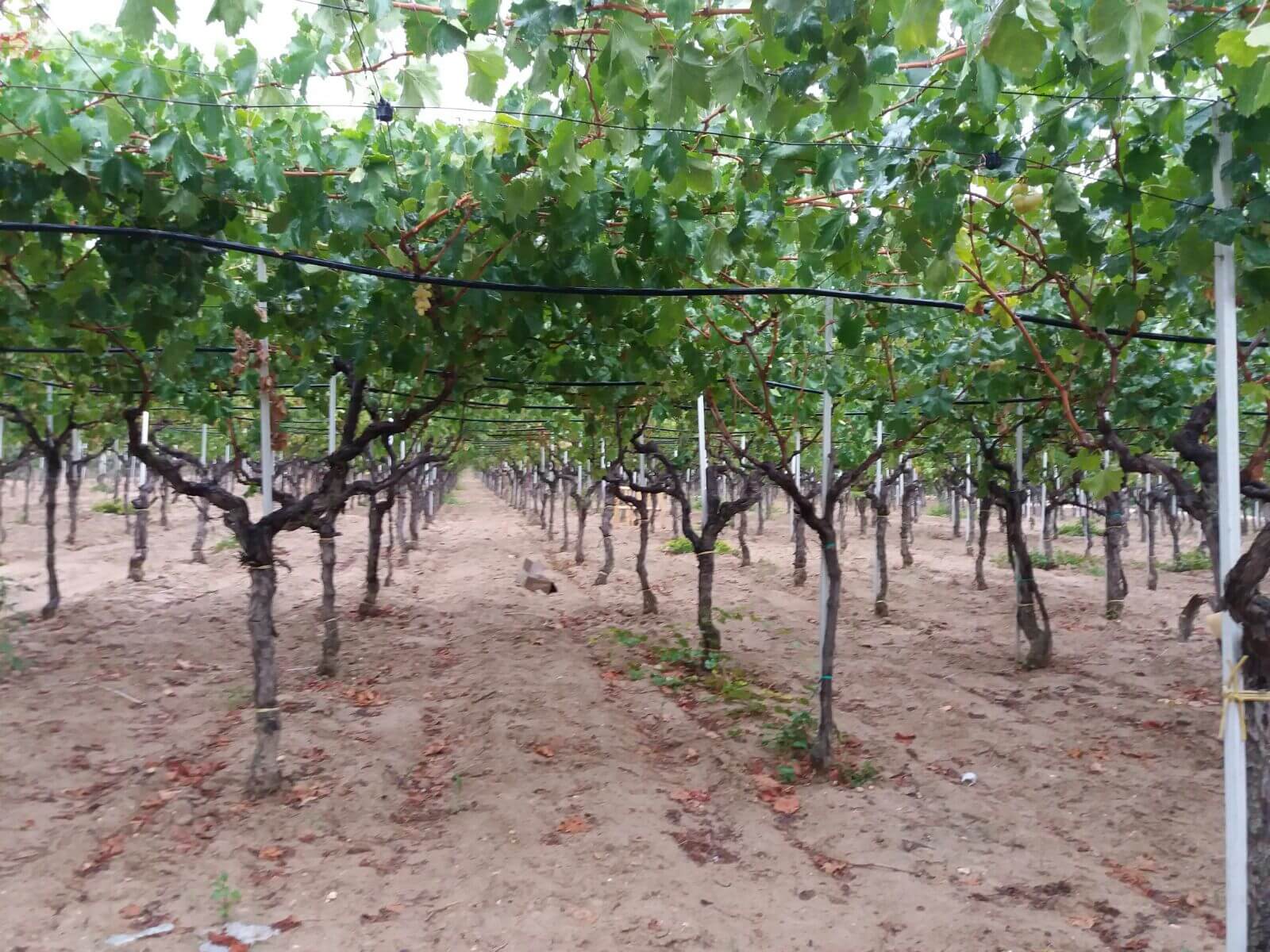 The vineyard after the harvest: whilst the foliage is still active, the vine transports organic nitrogen and carbohydrates to the roots, trunk and buds.
Agronomic and economic benefits
Proper post-harvest fertilization can translate into tangible medium-term advantages:
- greater uniformity of bud break
- improved flower bud differentiation
- better vegetative–productive balance
- reduced need for corrective interventions in spring
From an economic perspective, effective nutritional management helps reduce the need for spring corrective measures (fertilization and recovery biostimulation), improves production uniformity, and limits variability within the system, with positive effects on operational management and production quality. Adequate reserve accumulation also contributes to greater predictability of vegetative response, a key aspect for optimizing technical decisions in subsequent stages.
ILSA in post-harvest nutrition management
Defining an effective nutritional strategy requires an integrated understanding of crop physiology and soil fertility. In the post-harvest phase, each intervention should aim to support reserve accumulation and prepare the next vegetative cycle in a balanced way. ILSA solutions fit into this framework with a targeted technical approach, designed to integrate into agronomic programs and support growers in managing less visible but crucial phases of the crop cycle. The products indicated for this strategy—FERTIL™ 12.5, FERTIL™ 10 for soil and ILSAMIN® N90 and ILSAMIN® BORO for foliar applications—are permitted in organic farming and enable consistent intervention across the soil–plant system. A structured nutritional approach at the end of the cycle supports production continuity, helps reduce variability, and builds the conditions for more precise agronomic management in the following season.
FAQ – Frequently Asked Questions
When should post-harvest fertilization begin?
It is advisable to act immediately after harvest, when leaves are still functional and the plant is metabolically active. At this stage, the leaf apparatus continues photosynthesis and nutrient translocation toward storage organs and buds. Early intervention is also important because root activity remains effective as long as soil temperatures allow nutrient uptake.
Soil application acts in the medium term on fertility and reserves, while foliar application allows rapid and targeted nutrient integration.
It is especially useful in crops where bud fertility is critical, such as vines and fruit trees.
The choice depends on crop status and soil fertility level: FERTIL™ 12.5 for more intensive replenishment, FERTIL™ 10 for balanced strategies
No, the two phases are complementary: autumn focuses on building reserves, while spring supports new growth.







.png)